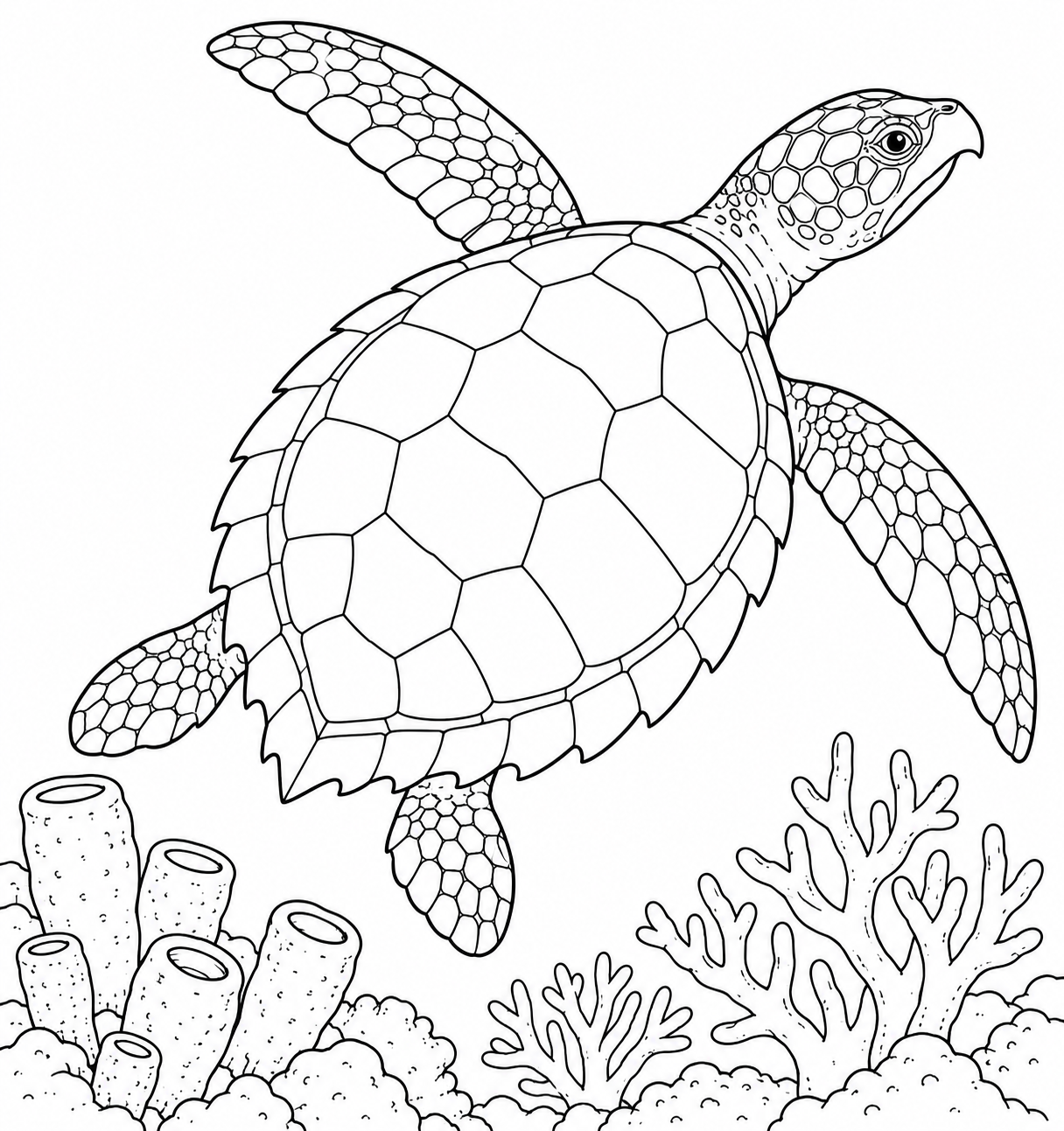
Green Sea Turtle
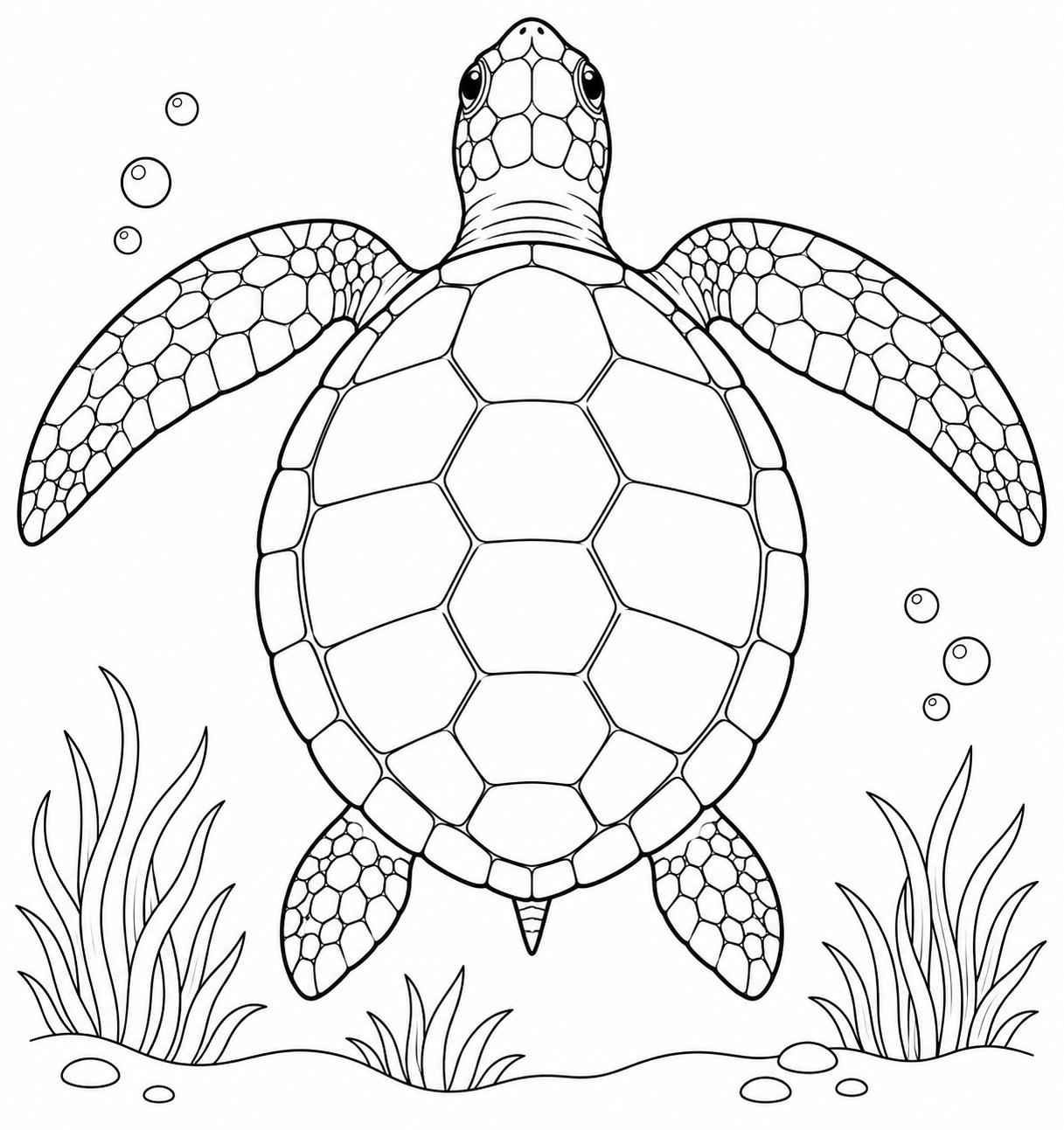
Adult green sea turtles eat mostly seagrasses and algae. Their name comes from their greenish fat, not the colour of their shell.
Six free printable sea turtle coloring pages — four species, a hatchling dash, and a nesting mother. No sign-up or email needed. Print a sheet below, or download the whole pack sized for your paper.
Every sheet below prints on one page, in black outline on white, with the site navigation stripped out. Use Print the whole pack for all six, or the button on a single sheet to print just that one. In the print dialog, choosing Save as PDF as the destination gives you a file to keep or email to a classroom.
Compare a loggerhead’s broad head with a hawksbill’s narrow beak, or follow the ridges on a leatherback’s back. Each sheet has a short fact to read together.
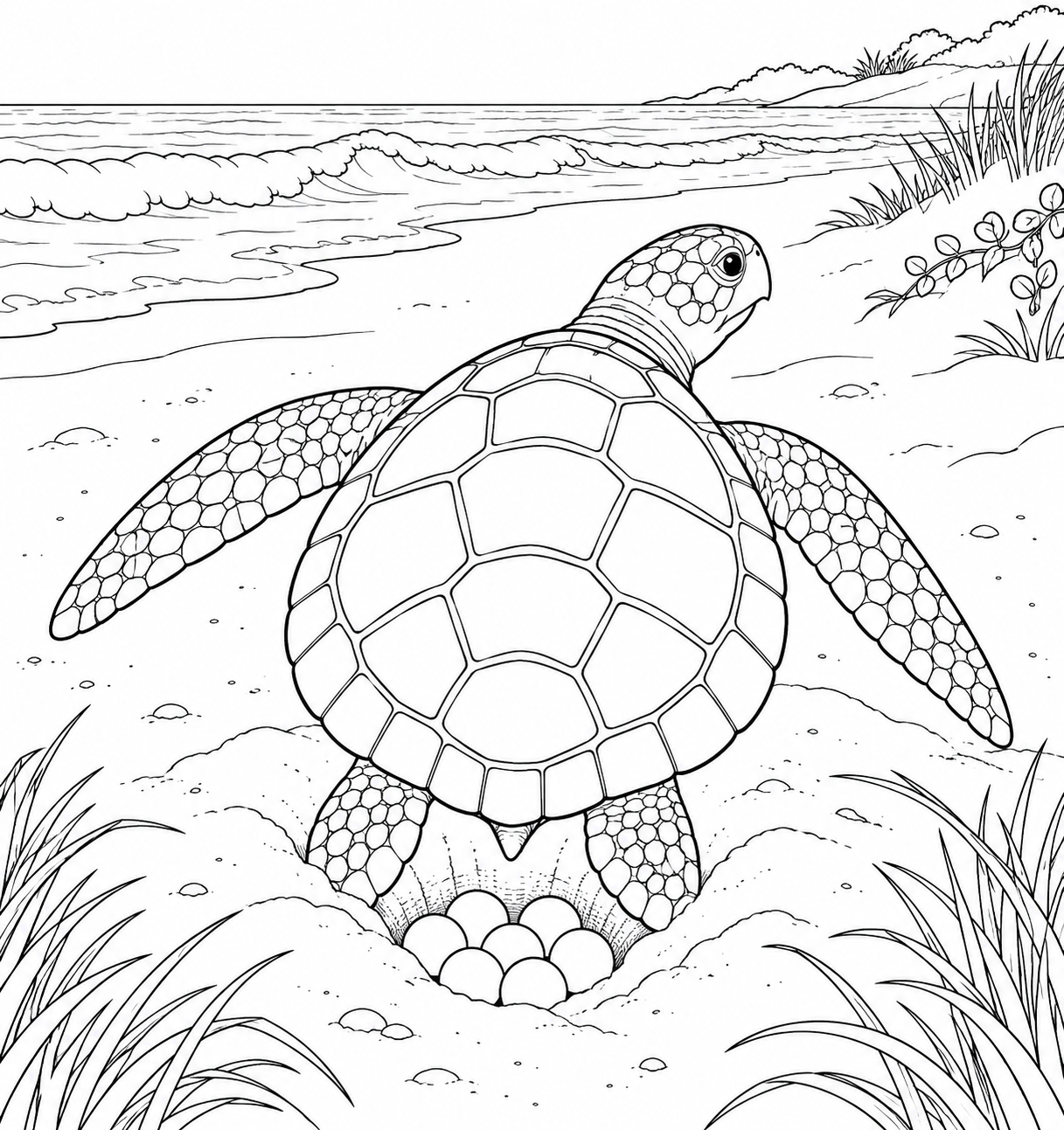
These original illustrations were created with AI and checked for obvious drawing errors. They are creative activities, not scientific identification diagrams. The nesting picture shows eggs below the sand so children can see the nest.
Once the colouring is done, the same journey is playable: guide a hatchling from the nest to the ocean in the lifecycle game, or dig a nest of your own in Nest Dig. Teachers, there is a matching lesson plan and worksheet aligned to NGSS life-science standards.
For photographs of the real animals and the science behind them, NOAA Fisheries and SEE Turtles provide more information.
Six sheets. Download a ready-to-print pack, print them all below, or pick one.
Download Letter PDF (6 pages, 10 MB) Download A4 PDF (6 pages, 10 MB)
Choose your paper size and print at actual size (100%). Both packs have generous margins.
Adult green sea turtles eat mostly seagrasses and algae. Their name comes from their greenish fat, not the colour of their shell.
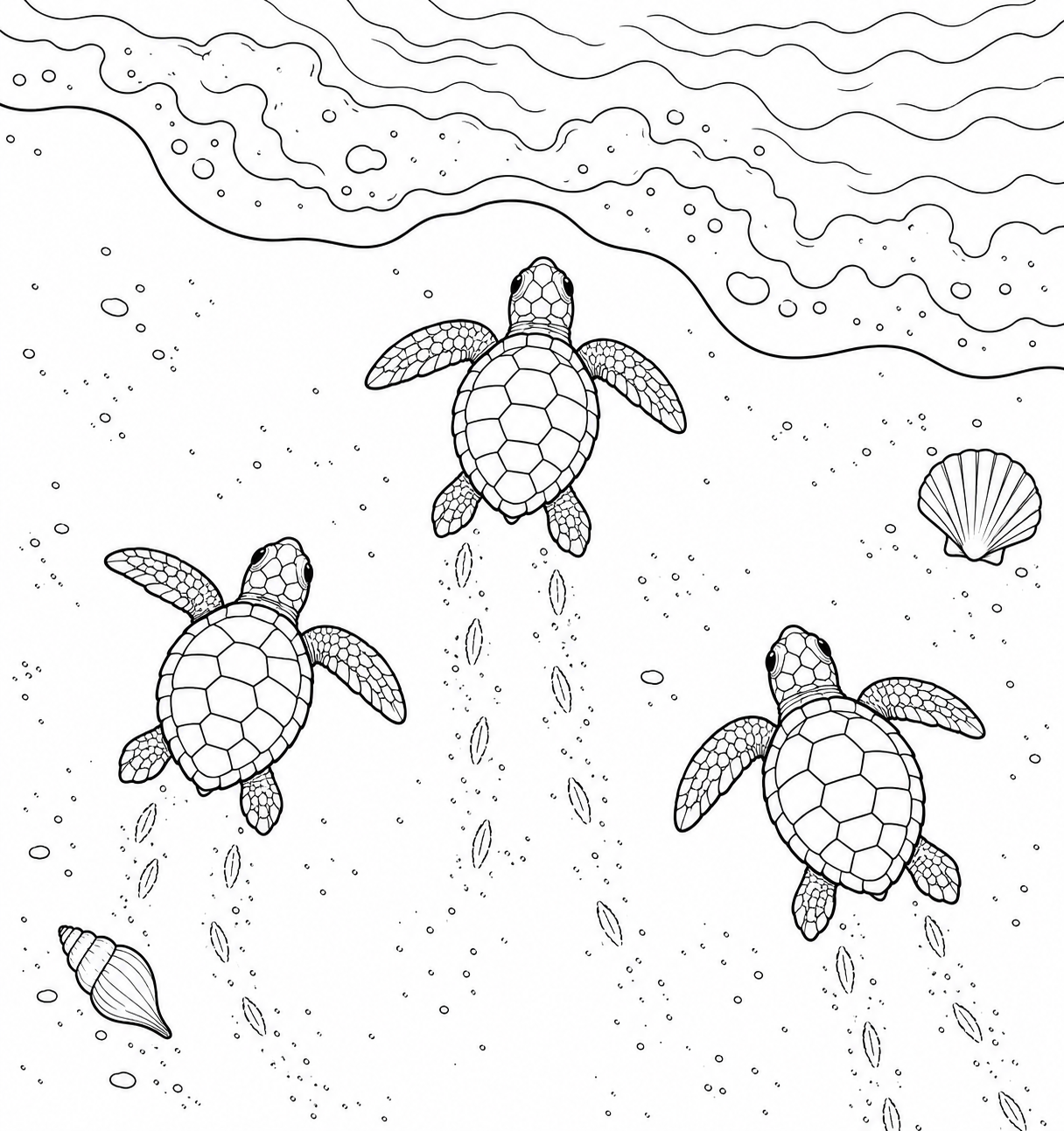
Hatchlings climb out of nests in the sand and crawl toward the ocean. Artificial lights can lead them away from the water.
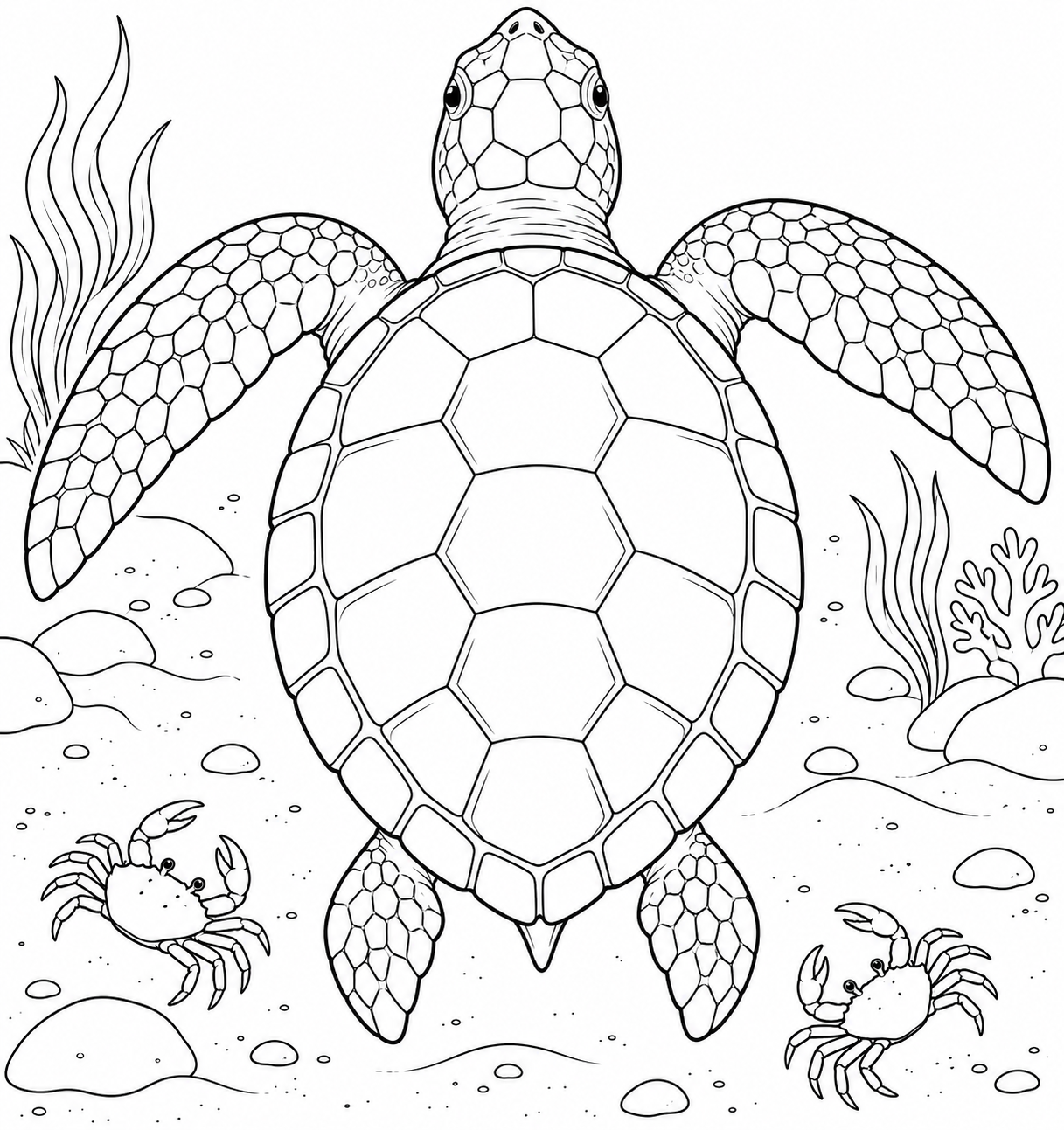
A loggerhead has a huge head and jaws strong enough to crunch straight through a conch shell.
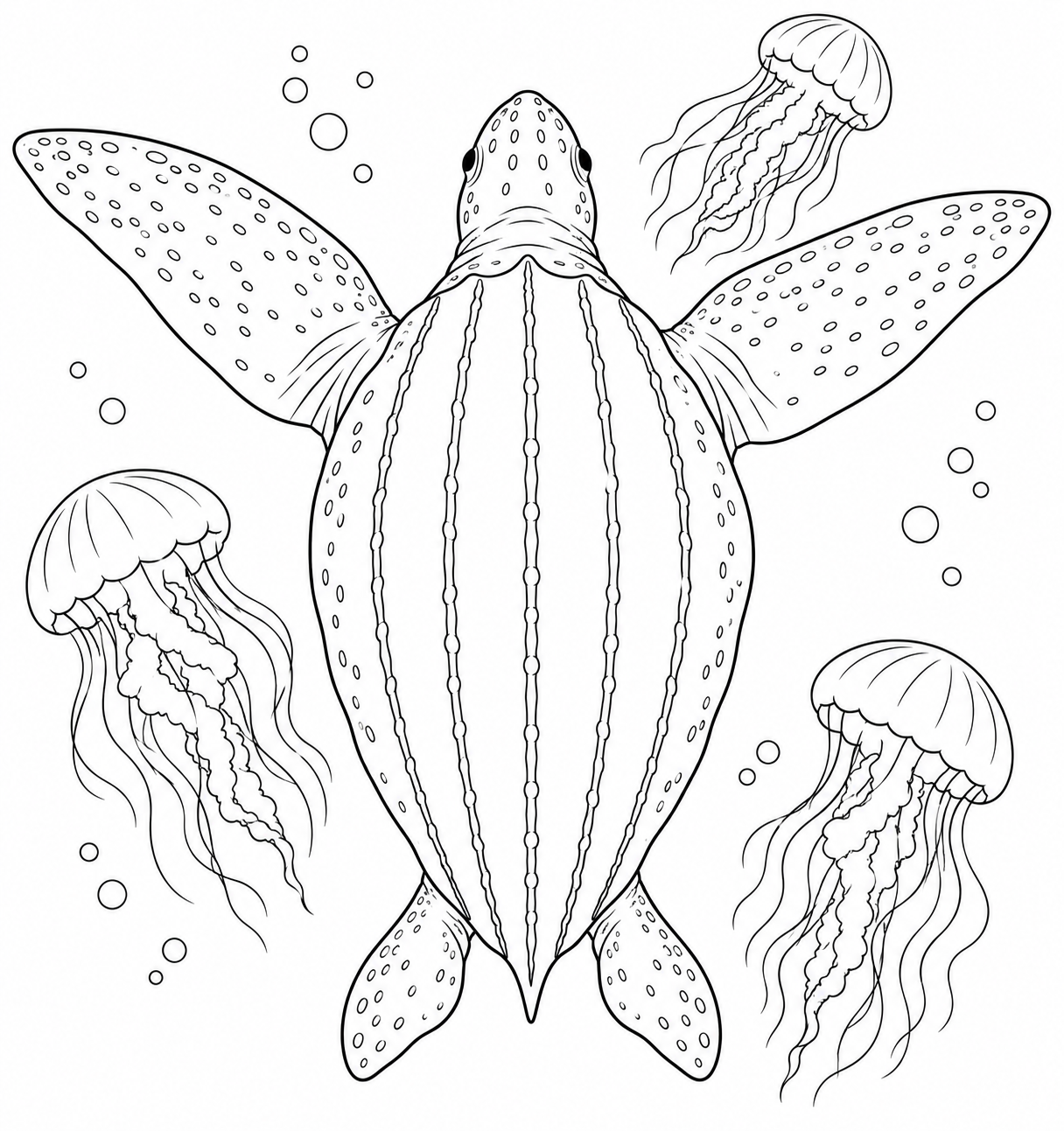
The leatherback is the largest living sea turtle. Its back has ridges and a tough, leathery covering instead of the hard scutes of other sea turtles.
A hawksbill has a narrow, pointed beak like a bird of prey. It uses it to pull sponges out of gaps in the coral reef.
A female sea turtle digs a nest on a sandy beach, lays her eggs, and covers them with sand. The number of eggs varies among species.
Hatch, run the gauntlet of crabs and gulls, grow up in the open ocean, and swim back to the beach where it started.
Play Turtle Life Span